Don't Buy Until You Read This: Amazfit Helio Strap vs Lexar Armor Gold Sdxc Uhs Ii 1Tb Card
Introduction
When shopping for electronics, accessories that seem simple—such as a watch strap—or a single component—such as an SD card—can have outsized impact on the daily experience. The Amazfit Helio Strap and the Lexar Armor Gold SDXC UHS-II 1TB Card are two very different items, yet both are frequently purchased by people who want reliable performance from wearable devices and imaging/storage systems respectively. This article compares the two from the perspective of real-world use: comfort and compatibility for wearables, and sustained throughput, endurance, and reliability for storage media.
Rather than treating these products as interchangeable, the goal here is practical: explain what each product is intended to do, highlight what buyers usually care about, show trade-offs, and provide a clear buying guide so readers make an informed choice suited to their needs.
At-a-glance: What these products are and who they serve
Amazfit Helio Strap — a wearable accessory designed to pair with Amazfit devices (or similar form-factor smartwatches). Buyers typically look for comfort, material quality, fit, and compatibility with their watch model. For many, a strap is also an expression of style and a factor in long-term wearability during activities like running, gym sessions, and sleep tracking.
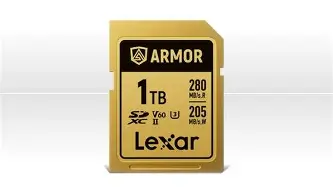
Lexar Armor Gold SDXC UHS-II 1TB Card — a high-capacity SD card that uses the UHS-II bus to deliver higher read and write performance than UHS-I cards. This class of card is targeted at photographers, videographers, drone pilots, and anyone who records high-resolution, high-bitrate video or needs large-capacity, durable removable storage. Buyers typically evaluate sustained write speed, read speed, capacity, endurance, and compatibility with cameras and card readers.
Detailed product analysis
Amazfit Helio Strap — ergonomics, materials, and daily use
For most people the strap is an invisible but essential part of wearing a smartwatch. The Amazfit Helio Strap aims to replace the stock band with a design that emphasizes comfort and durability. Key considerations include the band material (silicone, fluoroelastomer, leather, or woven nylon), the buckle or clasp mechanism, quick-release compatibility, and water/sweat resistance.
Real-world use cases: runners want a strap that breathes, doesn’t chafe, and secures tightly during movement; swimmers need water resistance and secure locking; professionals who wear a smartwatch all day require a strap that remains comfortable during long shifts and doesn’t trap sweat; fashion-conscious buyers want a strap that looks appropriate in both casual and formal settings.
Compatibility is the practical dealbreaker. The strap must physically and electrically (if it includes connectors or sensors) match the watch model. For proprietary lugs or bands, check the exact model numbers. Comfort is subjective, but testers and buyers commonly measure it by wearing the band for multiple activity types and climates to evaluate chafing, skin irritation, and retention of fit after heavy sweating.
Lexar Armor Gold SDXC UHS-II 1TB Card — performance, endurance, and workflow impact
Cards in the UHS-II class are about throughput and capacity. A 1TB capacity opens up practical workflows: long multi-camera shoots, extended drone flights recording at high bitrates, and photographers who want to minimize card swaps. UHS-II enables much faster transfers to a computer when paired with a compatible reader, and can support higher sustained write speeds—important for continuous video recording or burst photography.
Find top-rated Electronics products at great prices.
View Offers →Real-world use cases: wedding and event photographers who shoot thousands of RAW files in a session; videographers recording 4K/6K/8K footage where sustained write speed prevents dropped frames; drone pilots who record long flights at high bitrates and must rely on card reliability; content creators who want a single, large-capacity card to minimize downtime.

For many buyers, the questions are: Will the card keep up with my camera’s burst mode or video codec? Is the card durable enough for travel and field use? Does the camera or recorder officially support UHS-II? And how does the card perform in real sustained-write tests rather than peak read numbers?
Pros & Cons
Amazfit Helio Strap
- Pros:
- Comfort-focused designs are typically soft and lightweight, reducing wrist fatigue during extended wear.
- Variety of materials and styles make it easy to match personal and activity needs (sport vs. dress).
- Quick-release mechanisms simplify swapping bands without tools.
- Cons:
- Compatibility can be limited—some Amazfit models use proprietary connectors or lug widths.
- Lower-cost bands may suffer from premature discoloration, odor retention, or skin irritation.
- If the strap contains integrated sensors, accuracy and battery impact vary widely; verify claims before assuming parity with the watch’s own sensors.
Lexar Armor Gold SDXC UHS-II 1TB Card
- Pros:
- Large 1TB capacity reduces the need to swap cards during long shoots.
- UHS-II bus architecture supports much faster transfer rates to a compatible host/reader, speeding tethered workflows.
- High-capacity cards simplify media management when multiple cameras require identical media.
- Cons:
- Not all cameras or drones can take full advantage of UHS-II speeds—check device compatibility.
- Higher-capacity UHS-II cards cost substantially more than UHS-I or lower-capacity cards.
- Sustained write performance is more important than peak read numbers; some cards may advertise high peaks but fall short in long continuous recording scenarios.
Comparison table
| Feature | Amazfit Helio Strap | Lexar Armor Gold SDXC UHS-II 1TB Card |
|---|---|---|
| Product type | Wearable watch strap / accessory | Removable flash storage (SDXC, UHS-II) |
| Primary use | Comfort, style, compatibility with Amazfit watches | High-capacity, high-throughput storage for cameras, drones, readers |
| Compatibility | Model-specific; check lug width and connector type | Works in SDXC slots; UHS-II speeds require UHS-II compatible host |
| Durability | Depends on material (silicone/nylon/leather); water and sweat resistance vary | Often rated for shock, temperature, and water resistance—check manufacturer specs |
| Performance factors | Comfort and retention; sensor accuracy only if present | Sustained write speed, peak read speed, bus interface (UHS-II), V/R/X speed classes |
| Typical buyer | Active users, style-conscious smartwatch owners | Photographers, videographers, drone pilots, storage-heavy workflows |
| Price considerations | Generally low to mid-price; replacement bands are inexpensive | High for 1TB UHS-II cards; cost per GB higher than HDD/SSD but portable and camera-friendly |
Buyer concerns and real-world considerations
Different categories bring different legitimate worries. For watch straps, buyers worry about comfort, permanence of color, and whether the strap will irritate skin. For SD cards, the big worries are compatibility, whether the card will drop frames or corrupt footage, and long-term durability.
Common real-world scenarios:
- Runner: needs a strap that won’t bounce or trap sweat; an SD card is irrelevant unless the runner is also capturing video with a GPS device or camera.
- Travel photographer: wants a stretchable system—one versatile strap for the watch, and one reliable, high-capacity SD card that can store hundreds of RAW files without swapping mid-day.
- Event videographer: straps matter less; card throughput and sustained write speed matter greatly—dropping frames or corrupted clips at a wedding is catastrophic.
- Drone operator: needs both durability and speed—UHS-II cards with high sustained write rates reduce the risk of dropped frames during high-bitrate recording; secure, well-fitting straps for the operator’s watch are a convenience but not mission-critical.
Buying guide — how to choose
This section focuses on practical checks and decisions buyers should make before purchasing either product.
For the Amazfit Helio Strap
- Verify compatibility: Confirm the strap fits the exact Amazfit model (or other supported model). Check lug width and whether the strap uses a proprietary connector or a standard quick-release bar.
- Choose material based on activities: Silicone/fluoroelastomer for sports and swimming, woven nylon for breathability and casual wear, leather for dress use. Remember that leather is not ideal for heavy sweating or swimming.
- Assess clasp/buckle design: Deployant clasps and locking buckles reduce accidental opening during intense activity. For runs and workouts, a traditional pin-and-tuck or secure loop is often sufficient.
- Look for sweat and water resistance: If the user swims or exercises heavily—prefer bands marketed as water- or sweat-resistant and easy-to-clean.
- Test sizing and comfort: If possible, try the band on for at least a few hours, including during movement, to check for skin irritation or slippage.
- Warranty and aftermarket reviews: Look for bands with a clear return policy and read user reviews for long-term wear signals (discoloration, broken pins, odors).
For the Lexar Armor Gold SDXC UHS-II 1TB Card
- Confirm device compatibility: Many devices accept SDXC form factor, but UHS-II speeds only apply if the device’s slot supports UHS-II. If the camera is UHS-I-only, the card will still work but at lower speeds.
- Check sustained write ratings and video class: Look for cards with V60 or V90 ratings for high-bitrate video. For burst photography, sustained write matters to recover buffer quickly.
- Consider workflow: If fast transfers to a workstation are important, ensure a UHS-II-compatible card reader and USB host that can take advantage of the bus speed.
- Endurance and durability: Cards used in harsh environments should have temperature, shock, water, and X-ray ratings. Manufacturer warranties for data retention and failure handling are also significant.
- Budget vs. capacity: 1TB cards reduce swapping but cost more upfront. For critical shoots, many professionals prefer multiple smaller cards to mitigate risk of a single-point failure causing large data loss.
- Backup strategy: Always plan for immediate offload and backup. A high-capacity card is not a substitute for redundancy—download footage to a separate drive or cloud storage as soon as feasible.
Performance testing and practical tips
Independent testing is often the best indicator of how a product performs in the field. For straps, "testing" is experiential: wear it for a week across activities and climates. For SD cards, look for third-party benchmarks that measure sustained write at sizes and codecs that match intended use (e.g., 4K 10-bit ProRes, RAW burst shooting).
Practical tips:
Looking for the best Electronics deals on Amazon?
See Deals →- For straps, allow for small tightness adjustments to reduce skin movement that causes chafing; cleaning the strap regularly prevents odor buildup.
- For SD cards, format the card in the camera before first use and after a large data transfer; avoid full-format on the card reader unless the camera is offline for a long time.
- Always keep a small card reader that supports UHS-II if the card is UHS-II; otherwise transfer times can exceed practical windows, especially when backing up on a tight schedule.
- For mission-critical shoots, carry redundant media, and plan a workflow: capture → offload → verify checksum or file counts → backup.
Verdict and conclusions
Comparing the Amazfit Helio Strap and the Lexar Armor Gold SDXC UHS-II 1TB Card is really comparing apples to oranges—one is a wearable accessory whose primary value is comfort and fit, the other is a high-performance storage medium where throughput and reliability are paramount. The right choice depends entirely on the buyer’s needs.
If the priority is wearable comfort, daily activity tracking, and a straightforward, inexpensive upgrade to a smartwatch, the strap is the natural focus. Confirm compatibility, material, and clasp design, and treat the strap as a consumable accessory with replacement windows measured in months to years depending on use.
If the priority is capturing high-resolution images and video without interruption, minimizing card swaps, or expediting large media transfers, a UHS-II 1TB SDXC card is a tool that can materially improve a workflow—provided the host devices and readers can use the extra bandwidth. For creative professionals, investing in UHS-II media and compatible readers makes sense. For casual shooters, a lower-cost UHS-I or smaller-capacity card plus a solid backup plan may be more economical.
Ultimately, neither purchase is inherently risky if the buyer does the basic homework: check compatibility, read real-world reviews focused on sustained performance (for cards) or long-term wear (for straps), and plan a workflow that protects data and comfort. With those considerations in hand, a buyer can choose the product that delivers the most value for their specific use case.
Conclusion
Both the Amazfit Helio Strap and the Lexar Armor Gold SDXC UHS-II 1TB Card serve clear, but very different, needs. The strap enhances day-to-day wearable comfort and style, while the SD card targets storage-heavy, performance-sensitive workflows. Careful attention to compatibility, durability, and real-world performance will make the difference between a satisfying purchase and an expensive regret. Buyers who match the product to their actual use—rather than the marketing—are the ones who reap the benefits.