Biggest Ninja Blast Max Buying Mistakes (And How to Avoid Them)
Introduction
The Ninja Blast Max has attracted attention as a versatile, high-performance blender aimed at buyers who want more from a compact appliance. It promises the capacity to crush ice, blend smoothies, and handle everyday kitchen prep without the bulk of a full-size countertop machine. Yet, despite its appealing marketing, buyers often make avoidable mistakes that lead to disappointment or buyer's remorse. This article examines the most common errors people make when choosing the Ninja Blast Max, provides a clear, practical review of what the product is actually good at, and offers a systematic buying guide so readers can match the appliance to real-world needs.
Top Buying Mistakes and How to Avoid Them
Mistake 1: Buying Based on Marketing Power Numbers Alone
Many buyers equate higher wattage or marketing terms like “max power” with better results and durability. While motor power matters, it is not the sole determinant of blending performance. Motor torque, blade design, jar geometry, and how the machine manages load are equally important.
How to avoid it: Evaluate blended results in real situations — ice crush, frozen fruit smoothies, and nut processing — rather than relying on specs alone. Read hands-on reviews and watch demonstration videos that show the appliance in operation with the textures that matter to the buyer.
Mistake 2: Underestimating Jar Capacity and Intended Use
Buyers frequently choose the Blast Max expecting it to replace every blender in the home, from batch smoothie prep for a family to grinding flour. The Blast Max is designed as a compact, high-speed unit, and its jar capacity and shape will influence what it can do efficiently.
How to avoid it: Consider typical serving sizes. If one needs multiple servings at once for meal prep or entertaining, a larger countertop blender may be a better fit. For single-serve smoothies, post-workout shakes, or individual frozen drinks, the Blast Max aligns well with the use case.
Mistake 3: Ignoring Maintenance and Blade Replacement Availability
Blenders have moving parts that wear. Some buyers neglect to check if blades or other consumables are replaceable, or how easy parts are to clean. Expecting indefinite performance without routine care is unrealistic.
How to avoid it: Review manufacturer guidance on blade care, dishwasher safety, and recommended maintenance. Check whether replacement parts are available and read feedback about long-term durability.
Mistake 4: Overlooking Noise and Vibration in Small Kitchens
Compact high-speed blenders can be surprisingly loud. Buyers who live in apartments, have small kitchens, or need to prepare food early in the morning may be surprised by the noise level and vibration.
How to avoid it: Look for decibel estimates when available, read customer reviews about real-world noise, and test sound level in a store if possible. Consider rubber feet, counter stability, and whether noise mitigation matters enough to choose a different model.
Mistake 5: Expecting Professional-Level Smoothness for Every Ingredient
High-end commercial blenders deliver silkier textures for nut butters and hot soups. The Blast Max can produce excellent smoothies and handle ice, but expecting café-level creaminess for dense nut processing or prolonged heating is a common mismatch of expectations.
How to avoid it: Match expectations to intended tasks. For occasional nut butter or heavy-duty tasks, accept a coarser texture or consider a dedicated high-power blender.
Discover deals on Electronics — updated daily.
Shop Amazon →Mistake 6: Failing to Consider Counter Space and Storage
Even compact units have a footprint. Buyers sometimes fail to measure counter and cabinet space, then find the unit is awkward to store or leaves the kitchen cluttered.
How to avoid it: Measure countertop and storage areas before purchase. Consider whether the unit will stay on the counter for daily use or be stowed between uses.
Detailed Product Review and Analysis
Design and Build Quality
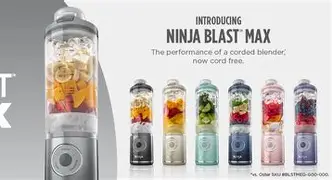
The Ninja Blast Max blends a compact footprint with robust materials in most of the variants. Its design typically emphasizes a solid base, stackable or nestable blending cups, and safety interlocks that prevent operation unless the jar is correctly attached. Buyers value a slim profile that does not sacrifice stability during high-speed operation.
Motor and Blending Performance
The motor is engineered to provide quick bursts of power for crushing ice and pulverizing frozen fruit. In practical terms, this means short blending cycles for common tasks: smoothies, frozen margaritas, and blended iced coffee perform efficiently. Tests and user reports often highlight that while it handles ice well, long continuous blending of dense mixtures can warm the motor; intermittent pulse patterns typically yield better results and protect the machine from overheating.
Blade Design and Versatility
Blade geometry in the Blast Max is optimized for lift-and-pull action to create a vortex that draws ingredients toward the cutting surface. This contributes to effective blending in small jars. However, blade assemblies are typically integrated and not intended for user replacement as frequently as cutters on larger machines, so attention to cleaning and correct use is important for longevity.
Controls and Presets
Controls on the Blast Max are usually straightforward: pulse, blend, and smash/ice options. Buyers appreciate tactile buttons and a simple interface that minimizes a learning curve. Preset programs can be helpful for consistency, but manual pulsing often produces better custom textures for nuanced recipes.
Cleaning and Maintenance
One major advantage is the relative ease of cleaning: most jars and lids are dishwasher-safe or can be rinsed quickly. The base should never be immersed, and buyers should clean seals and threads to prevent dried residues. Frequent cleaning prevents odors and preserves blade performance.
Real-World Use Cases
- Everyday Smoothies: Quick single-serve smoothies in the morning, blending fruits, leafy greens, and protein powders efficiently.
- Frozen Drinks and Cocktails: Crushed-ice cocktails and blended frozen beverages for small gatherings or personal use.
- On-the-Go Lifestyles: People who need a portable jar or travel-friendly option appreciate that certain configurations accommodate single-serve cups.
- Small-Batch Food Prep: Pureeing small portions of soups, baby food, or pesto for two people.
Limitations in Practice
Buyers report that while the Blast Max is excellent for its intended compact use cases, it is not a replacement for commercial-grade blenders when it comes to making perfectly smooth almond butter, heating soups by friction, or processing large batches of dough or batter. Understanding these limits is key to satisfaction.
Pros & Cons
Pros
- Compact footprint suited to small kitchens and dorms
- Strong ice-crushing ability for frozen drinks and smoothies
- Simple controls and quick operation for daily use
- Many parts are easy to clean and often dishwasher-safe
- Good value for people seeking a single-serve or small-batch solution
Cons
- Not designed to replace high-end commercial blenders for heavy-duty tasks
- Potential noise and vibration during high-speed cycles
- Blade assemblies can be difficult to replace or service long-term
- Smaller capacity limits batch preparation for families
- Continuous heavy use may lead to motor heating and thermal cutouts
Comparison Table: Where the Blast Max Fits
| Feature | Ninja Blast Max | Personal Single-Serve Blenders | High-End Countertop Blenders |
|---|---|---|---|
| Typical Capacity | Single-serve to small batch (one to two servings) | Single-serve (one cup) | Large batches (multiple servings) |
| Best Use | Smoothies, frozen drinks, small prep tasks | Quick shakes and small smoothies on-the-go | Nut butters, hot soups by friction, large prep tasks |
| Power & Torque | High-speed motor designed for ice crushing | Lower power, short bursts | High torque and sustained power for heavy tasks |
| Noise Level | Moderate to loud at peak | Often loud but brief | Very loud, but more stable |
| Cleanability | Most parts dishwasher-safe; base wipes down | Simple to rinse and clean | Dishwasher-safe jars, complex bases |
| Price Range | Mid-range value | Lower-end, budget-friendly | Premium to professional prices |
Buying Guide: How to Choose and Avoid Common Pitfalls
1. Start with an honest assessment of intended use
Buyers should list the tasks they expect the blender to perform: morning smoothies, weekend frozen cocktails, baby food, or full meal prep. If most tasks are single-serve or small-batch, the Blast Max is a strong contender. If the list includes frequent heavy-duty use, consider a larger appliance.
2. Check capacity, jar shape, and lid options
Jar geometry affects blending efficiency. Look for jars that match the intended recipes; tall narrow jars create strong vortices for smoothies, while wider jars may be better for dips and small food chops. Verify whether lids or travel cups fit standard cup holders and whether spare lids are available.
Shop the latest Electronics picks on Amazon.
View Offers →3. Evaluate real-world performance, not just specs
Seek out user reviews that show results with icy and fibrous ingredients. Pay attention to reports about how long tasks take, whether pulse behavior is effective, and how consistent the texture is.
4. Consider noise and vibration
If living arrangements make noise a concern, prioritize models with better isolation feet and a stable base. Test the unit if possible and listen for rattles or excessive vibration that could damage cabinets over time.
5. Ask about warranty and serviceability
A practical warranty can save money if parts fail. Confirm the length and coverage of the warranty and whether customer service is responsive. Verify how easy it is to source replacement jars or blades in the future.
6. Confirm cleaning routines and dishwasher compatibility
Time-poor buyers should prefer parts that are dishwasher-safe and easy to reassemble. Check whether seals and threads can trap food and whether the manufacturer provides cleaning guidance that fits the buyer’s habits.
7. Think about storage and accessories
Consider if extra cups, to-go lids, or travel options are essential. If the kitchen has limited storage, look for stackable accessories or compact storage solutions. Some buyers prefer models with dedicated storage containers for lids and small parts.
8. Test textures important to the buyer
When evaluating in-store or in hands-on reviews, pay attention to the final texture for favorite recipes. For example, leafy green smoothies, frozen banana blends, and blends involving ice should be tested separately to see if the outcome matches expectations.
9. Be cautious with long continuous blends
Compact high-speed motors do best with short bursts. If a recipe requires long continuous blending, use pulse intervals to avoid overheating and prolong motor life.
10. Compare total cost of ownership
Factor in possible replacement parts, extra jars, and the likelihood of needing a second machine for heavy tasks. Sometimes buying a complementary high-end blender for occasional heavy-duty work is cheaper in the long run than overloading a single compact machine.
Conclusion
The Ninja Blast Max occupies a practical niche: it brings high-speed blending capability to buyers who need compact performance for smoothies, frozen drinks, and small-batch food prep. The most common buying mistakes stem from mismatched expectations — assuming it will replace commercial machines, overlooking capacity and maintenance needs, and focusing too narrowly on marketing claims. By clarifying real-world use cases, testing textures that matter, checking service and parts availability, and considering noise and storage constraints, buyers can choose the right appliance and avoid frustration. With the right expectations and care, the Blast Max can be a reliable, efficient addition to a kitchen that values convenience and speed.